



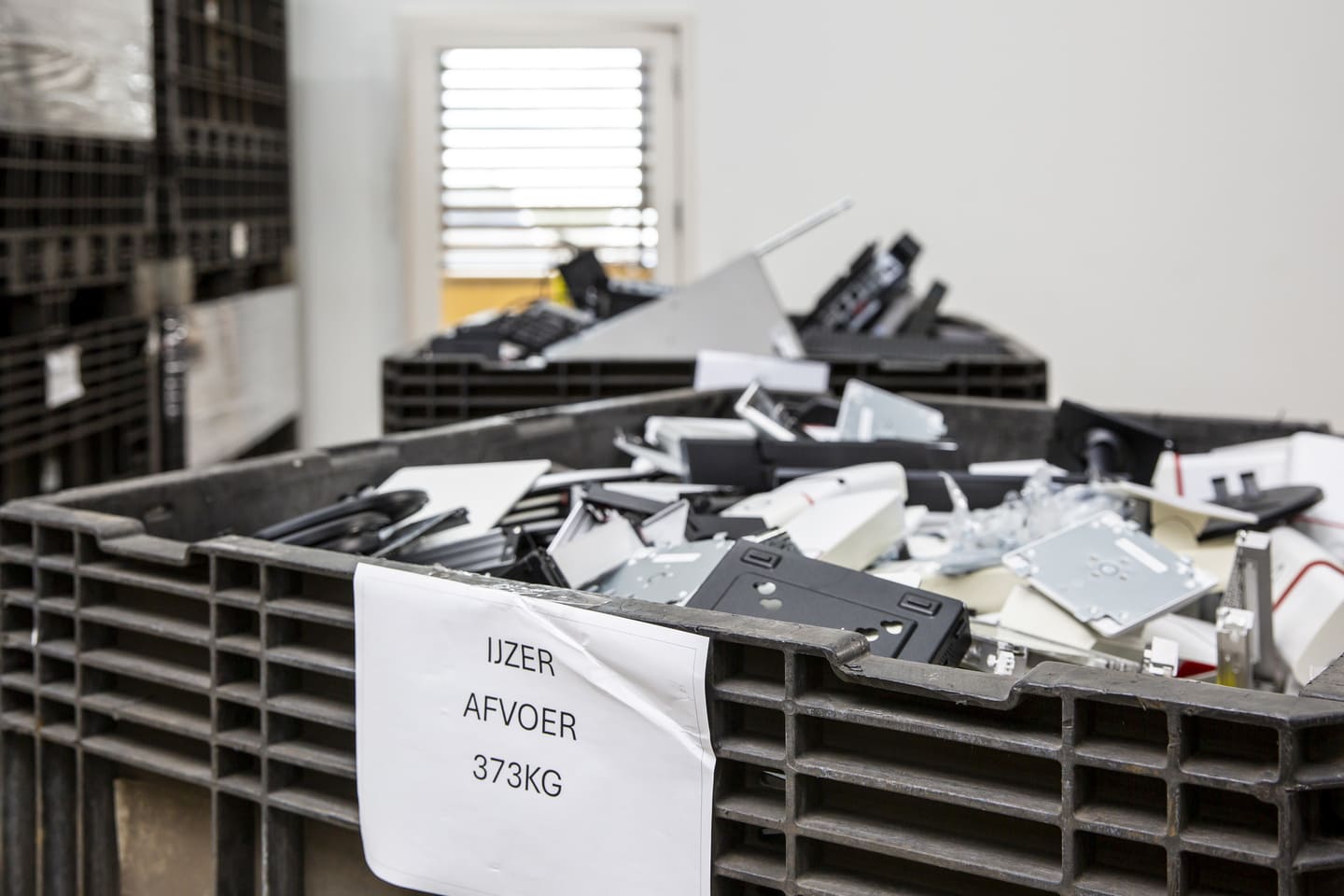
Decommissioned laptops, PCs, servers and phones: every organisation has them. There are broadly three ways to dispose of them: sell them, have them recycled or donate them. Each option has its pros and cons. We compare them on four criteria: return on sale, data security, sustainability and convenience.
Option 1: Sell your old hardware
In a buy-back scheme, a specialist organisation takes your equipment off your hands. Equipment that is still in working order is wiped, refurbished and put back into service; anything that is no longer usable is recycled responsibly.
- Yield: The residual value is paid out or offset against the costs.
- Data security: Certified data erasure, with a certificate for each data storage medium.
- Sustainability: high, because reusing extends the lifespan of a device.
- Convenience: Collection, registration, deletion and reporting are all taken care of for you.
Option 2: Have old hardware recycled
In the recycling process, equipment is dismantled and raw materials such as metals, plastics and glass are recovered.
- Yield: low or none; there may be costs involved.
- Data security: only safe if the data storage media are first demonstrably erased or destroyed.
- Sustainability: It’s better than throwing it away, but the device itself won’t be given a new lease of life.
- Convenience: depending on the batch.
Recycling is the right choice for equipment that really is no longer usable. If you recycle equipment that still works, you’re letting its value go to waste.
Option 3: Donate old hardware
Donating laptops to a school, charity or staff members feels good – and it is a good thing to do. But there are two things to bear in mind. Firstly, you remain responsible for the data: only donate devices that have been certified as having been wiped. Secondly, donating takes time: you’ll need to find a recipient yourself, prepare the devices and keep a record of what has happened to each one.
- Yield: No financial return, but social value.
- Data security: a risk if the data has not been certified as having been erased.
- Sustainability: high, provided the appliances are actually used.
- Convenience: low; you sort everything out yourself.
Which option is right for you?
In practice, a combination is often the best option. Let your opponent buying old hardware: Anything that is still usable is given a new lease of life and generates residual value. Anything that is no longer usable is recycled responsibly. If you wish to donate any items, please ensure they are professionally wiped clean first.
Important in all cases: it must be possible to prove that the data has been deleted before a device is dispatched. Read more about how this works at data destruction.
Social impact and residual value
At Reuzado, you don’t have to choose between profit and social value. Reuzado is a social enterprise and is recognised as Amsterdam Social Firm. Your hardware is wiped using Blancco, reused in accordance with the EN 50614 standard, and any remaining parts are recycled in accordance with WEEELABEX guidelines. You will receive certificates, inventory lists and environmental reports via the Circu-IT customer portal.
Curious to find out how much your depreciated IT equipment is worth? Request a no-obligation valuation via hardware buyout.
Frequently asked questions
Can I donate decommissioned laptops?
Yes, but make sure the data has first been verifiably and certified as deleted. You remain responsible for the data on the devices.
What happens to hardware that is no longer usable?
It is dismantled and supplied to specialist recycling companies, which recover raw materials such as metals, plastics and glass in accordance with WEEELABEX guidelines.
Is bulk purchasing also suitable for small quantities?
Yes. Whether it’s a small number of devices or an entire IT environment, the hardware is collected, wiped and processed.